From Doomscrolling to Dreamscrolling (Same Devices, Different Identity)
You don’t need to quit your social media platforms—you need to redesign how you use your devices. Proactively and positively shape your identity with every scroll.
“Doomscrolling” isn’t just the slang; it’s now a measured psychological behaviour. Psychology and media researchers have defined doomscrolling as a repetitive, compulsive consumption of negative online content, often despite negative emotional impact.
It often manifests as:
Reading bad news, one after another
Getting stuck in algorithm-driven feeds
Telling yourself “just one more post” and not stopping
Feeling mentally drained, anxious or overwhelmed afterwards
In a landmark case in the US, jurors recently found Google and Meta negligent in making their platforms - YouTube and Instagram - designed to be addictive without regard for wellbeing. With platforms built to maximise attention, this isn’t just behaviour - it’s architecture.
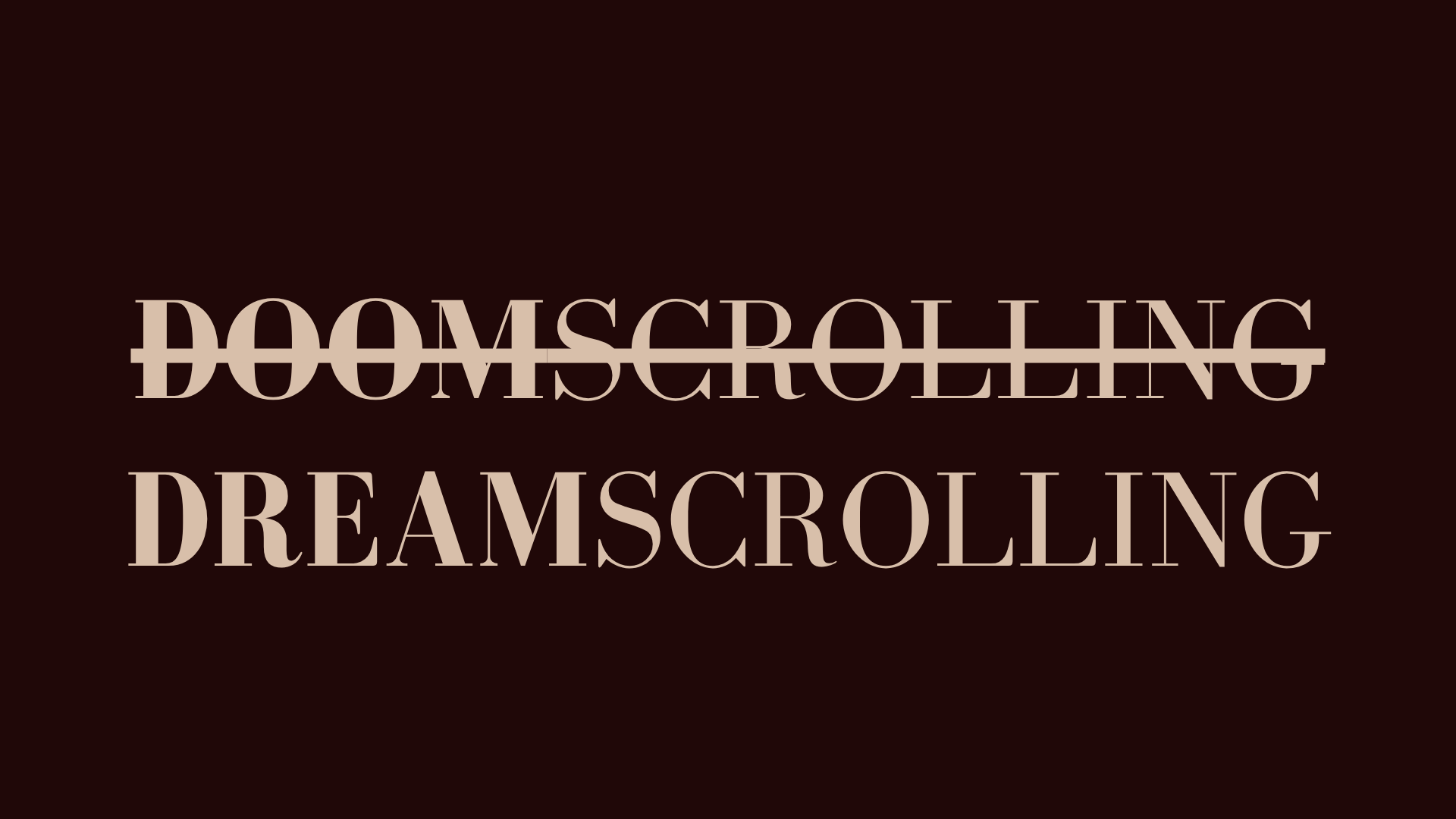
But what if you could exploit your devices for your own purposes? And carefully curate them to drive your goals, shift your identity and build your personal brand? All while remaining a ‘Digital Minimalist’. Because you don’t need a digital detox. You need to leverage your time for what I’m dubbing ‘dreamscrolling’ instead.
1. Digital Minimalism: A Philosophy for Technology
When you detox from social media entirely, you lose its benefits too - the ability to connect, build relationships, build your personal brand or learn new things.
So, how do you make the most of what makes social media so special, while also taking care of your mental and physical health? Enter Digital Minimalism. It’s a philosophy to both optimise the opportunities of the digital world while at the same time minimising its use.
Cal Newport, a Professor of Computer Science at Georgetown University, in his book, Digital Minimalism, describes the mindset as:
“A philosophy of technology use in which you focus your online time on a small number of carefully selected and optimised activities that strongly support things you value, and then happily miss out on everything else.”
If your attention is being “exploited” as one of the world’s most valuable resources, then why not actively shape what you pay attention to? Because the problem isn’t how you scroll, it’s what you scroll.
2. Dreamscrolling: Identity Shifting & Microlearning
Your social media feed doesn’t need to be chaotic, spiral you into the comparison trap or be all doom and gloom.
Dreamscrolling - as I’m calling it - is the intentional and selective use of digital platforms to consume content that actively shapes your identity, thinking and goals in a positive direction. It turns scrolling from passive distraction, or addiction, into a tool for growth, learning and self-direction.
For example, as I’ve shared in my earlier blog, How I Use Pinterest Boards to Rewire My Brain and Upgrade My Life, I’m a huge proponent of Pinterest. Whether you're building your personal brand or planning your next big idea, I treat the platform as my ‘second brain’. For more on that term, see my blog, Your Simple Guide to Building a Second Brain (6 Tips).
I scroll my carefully curated boards and subboards as part of my visualisation practice, which I discussed in my blog, Vivid Visualisation: The Mental Edge of High-Performers. Loved by athletes and CEOs alike, it’s a practice that has captured my attention in the best possible way.
But instead of relying on elite-level discipline to create goal-driven images in your mind, Pinterest puts it right in front of you. You decide which boards you scroll and when. The more you do, the more the algorithm understands your goals.
3. One Platform Per Purpose
I was at dinner with my cousin-in-law recently, when he announced, “Dianne, I feel like you are really measured in how you scroll social media. You liked my post from days ago today.”
He was only partly right. I use social media daily - but with intention. I use different platforms in different ways within certain timeframes. Each platform serves a purpose.
Pinterest isn’t the only platform I optimise intentionally:
LinkedIn: Publishing thought leadership. Most often after hours, I share my latest article, video and podcast episode.
Instagram: A behind-the-scenes look at my life. With a few exceptions, I primarily use the platform for real-life relationships.
YouTube: Publishing my twice-weekly video, plus microlearning, inspiration and entertainment via podcasts, presentations and vlogs.
Spotify: Sharing my twice-weekly podcast episode and also learning and entertainment via podcasts and my new love of audiobooks.
X: Staying on top of all things world politics - outside of podcasts, I only follow thought leaders on this platform.
TikTok: Inspiration only. I plan to keep this a strictly motivational or microlearning space.
These defined objectives turn the habit of doomscrolling intentionally toward my dream life. But the key is to keep it tightly curated.
4. Feng Shui Your Following List: Where Your Attention Goes Energy Flows
Clutter creates chaos and confusion.
In their book Joy at Work,cleaning sensation Marie Kondo, best-selling author ofThe Life-Changing Magic of Tidying Up and Spark Joy, teams up with organisational psychologist Scott Sonenshein. The duo apply Kondo’s famous ‘Spark Joy’ mentality to the workplace.
The book highlights that when you clean the clutter, you clear the way for receiving more of what you need. As Kondo points out, even Feng Shui experts agree. For example, when you clear space in your inbox, you attract more of what you need to complete your work.
So, why not apply the same Feng Shui mindset to your following lists across social media? Outside of your personal relationships, only follow a select group of influencers or businesses most aligned with your goals and interests. Study only the knowledge or lifestyle of those you most admire. This is intentional environment design.
But remember, your inspiration or best ideas won’t strike when you’re glued to your screen. It will emerge when you’re living your slower offline life.
5. Analogue Life: Creating High Value Down Time
The trending renaissance of the analogue life is the reaction to hyper-digital living. As I remember learning in Systems Thinking while studying my MBA, when you push a system too far it will eventually create an opposite feedback loop.
The growing interest in an analogue life is about physical, slower and more tangible experiences. For me, this manifests in cooking, baking, yoga, playing the piano, flipping through coffee table books on slow weekends, and long walks.
An appreciation of analogue life is not about rejecting technology, but balancing it. As Cal Newport describes in Digital Minimalism, it’s swapping low-value downtime, like scrolling, for high-value downtime. It’s returning to high-value hobbies, for example, as I’ve shared in my earlier blog, 7 Hobbies of Highly Effective People: How Hobbies are the Real Edge for Your Professional Personal Brand. It’s having a craft as our ancestors did. Doing this creates friction, growth and texture in our otherwise always-on digital world.
From Doom and Gloom to Dream Identities
We don’t need to reject our devices — we need to redesign our relationship with them. The shift from doomscrolling to dreamscrolling is ultimately an identity shift: from passive consumption to intentional curation. When you combine digital minimalism with purpose-led use of platforms and balance it with a richer analogue life offline, your devices stop shaping you by default and start working for you by design.
Same tools. Different identity. Different life.